A skin fade is the sharpest cut in the shop and the fastest to expire. That is not a flaw in the cut; it is the arithmetic of taking hair down to skin. When the starting point is zero length, every day of growth is visible, and the crisp blend that left the shop softens on a schedule you can predict almost to the day.
At HairKutters in Rutherfordton, fades and line-ups are core services, and the skin fade draws more myths than any other cut. This piece sorts the common claims, then covers what actually grows back first and how to keep the cut looking deliberate between visits.
The claims, sorted
| Claim | Verdict | The plain version |
|---|---|---|
| A skin fade lasts a month like a regular cut | Myth | It looks its sharpest for about a week and presentable for roughly two. By week three the blend has grown into a different, softer cut. |
| The top grows out first | Myth | The lowest part grows out first in appearance, because hair emerging where skin was bare changes that zone fastest. The neckline and around the ears show it earliest. |
| A fade grows out evenly | It depends | A well-blended fade grows out in order and still looks intentional. A fade with harsh lines grows out in visible steps that look like stripes. |
| You can stretch a fade with home clippers | It depends | Cleaning stray neck hairs below the line is safe. Re-cutting the blend itself usually creates a new line the barber then has to blend out. |
| More frequent cuts damage hair | Myth | Clippers cut the outside of the hair. Coming every two weeks harms nothing; it is simply the schedule this style requires. |
What grows back first, and why
Hair grows roughly half an inch a month, which sounds slow until you apply it to a fade. In two weeks, the skin zone has about a quarter inch of hair, enough to erase the skin contrast entirely, while the longer top has barely changed in proportion. That uneven visual effect is why the fade looks tired at the edges while the top still looks fine. Stubble also catches light differently than longer hair, so the regrowth reads as a shadow before it reads as length.
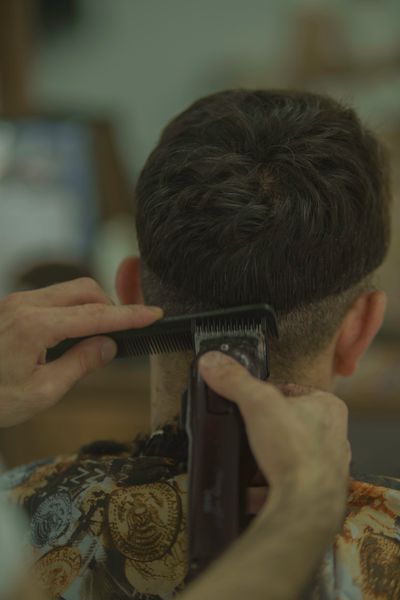
The neckline and the area around the ears go first because the hair there is cut shortest and the skin contrast is highest. A neck clean-up between full cuts addresses exactly those zones, which is why many men on a fade schedule alternate: full cut, clean-up, full cut. That rhythm keeps the outline sharp at a shorter appointment in between.
The honest schedule
If you want the fade to look like a fade most of the time, plan on every two weeks, three at the outside. Weekly is what men who need a consistently sharp finish for work choose. There is no product, technique, or home routine that changes this, because the schedule is set by growth, not by the barber. Men who cannot or do not want that rhythm are usually happier with a taper or a slightly longer fade, which keeps a similar feel with a much more forgiving grow-out. That is a trade worth making openly rather than wearing a tired fade for two weeks of every month.

Between visits: what helps and what hurts
What helps is simple. Wash the scalp normally, keep the neckline free of stray hairs below the cut line if you have a steady hand and a trimmer, and leave everything else alone. What hurts is chasing the blend with home clippers, shaving the fade zone with a razor to fake freshness, which often irritates the skin and grows back prickly against the longer hair above it, and wearing tight hats for hours in Rutherfordton summer heat, which mats the top and makes the contrast worse. When the blend is gone, it is gone. Book the chair.
Common questions
How long does a skin fade really look good?
About one week at its sharpest and roughly two weeks looking presentable. After that the skin zone has grown out enough that it reads as a short cut, not a fade.
What is a neck clean-up and does it help?
It is a short appointment that re-cleans the neckline, around the ears, and the edges between full cuts. It keeps the outline sharp and stretches the finished look.
If I cannot come every two weeks, what should I get instead?
A taper or a longer fade. Both keep a clean, blended look but grow out gradually, so a three or four week schedule still looks deliberate.
Photos in this guide are representative stock images.
← All guides from HairKutters← Back to HairKutters