Most style changes fail for a boring reason: the photo a client brings in shows hair that is thicker, straighter, or styled for twenty minutes by someone else, on a head that is not theirs. The cut itself might be fine. The mismatch between the picture and real life is the problem, and it is fixable in one honest conversation in the chair.
At HairKutters in Rutherfordton, men's haircuts, fades, and beard trims are the daily work, and a style change is a normal request. This guide compares the ways to approach one, from a full change in a single visit to a gradual shift over several cuts, so you can pick the route that fits your hair and your mornings.
The three routes to a new style
| Route | What happens | Best for | Watch out for |
|---|---|---|---|
| Full change in one visit | Old style cut away, new shape done in one appointment | Hair that already has the length the new style needs, and men who are certain | There is no halfway check. If the new style fights your growth pattern, you live with it until it grows |
| Gradual change over 2 to 3 cuts | Each visit moves the shape partway toward the target | Growing out a fade, changing a part, or testing longer hair | It needs patience and the same barber, or each visit resets the plan |
| Test drive first | Keep the current cut but style it differently for a few weeks | Men unsure whether they will do the daily styling a new look needs | Styling alone cannot change the underlying shape, only preview the effort |
The gradual route is underrated. Hair grows about half an inch a month, so growing the top out for a longer style is a two or three visit project no matter what anyone promises. A barber who knows the destination can keep those in-between cuts looking deliberate instead of overdue, trimming the sides and cleaning edges while the top gains length.
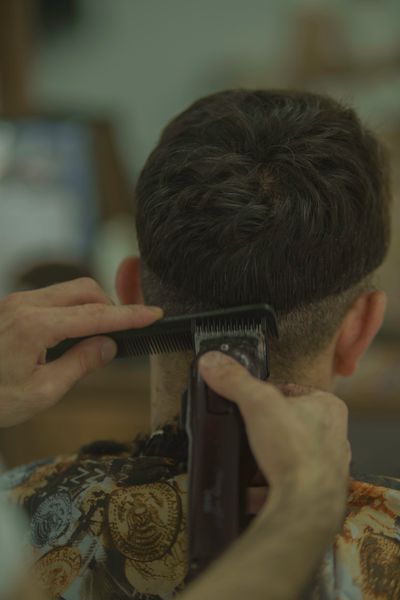
What to bring, and what to say
Bring two or three reference photos, ideally of men with hair similar to yours in thickness and texture. One photo of the style on a good day and one of what you want to avoid are more useful than five celebrity shots. Then say the three things barbers actually need to hear: how much time you will spend on it in the morning, how often you are willing to come back, and what you have disliked about past cuts.
Be honest about daily effort. A style that needs blow-drying and product every morning will look neglected by Wednesday if your real routine is a towel and a ball cap. A good barber would rather design a slightly simpler version you will actually wear than copy a high-maintenance shape that collapses. Ask what the style looks like unstyled, and what it looks like in four weeks. Those two answers tell you most of what the photo cannot.
Where the professional line is
Some experiments belong at home: parting your hair the other way for a week, growing a beard out to see its pattern, trying a different product. The cut itself belongs in the chair, because a barber reads growth patterns, cowlicks, and head shape while cutting, and can tell you mid-cut if the target needs adjusting. That live feedback is the whole value of the conversation. If the barber says your hair will not do exactly what the photo does, believe them and ask what the closest version for your hair looks like.
After the change
Give a new style two weeks and at least one wash-and-style cycle of your own before judging it. Watch how it behaves on a humid Rutherfordton afternoon, not only in the shop mirror. If one part misbehaves, a small adjustment at a neck clean-up can fix it without restarting the whole cut. And when you find a version that works, have the barber note the guard lengths and details, so the next visit starts from the style you liked instead of a fresh negotiation.
Common questions
Should I change my hairstyle all at once or gradually?
Gradually is safer when length has to grow or you are unsure about daily styling. A full change in one visit works best when your hair already has the length the new style needs.
What photos should I bring to show my barber?
Two or three photos of men with hair like yours in thickness and texture. Add one photo of what you want to avoid, which is often as useful as the target.
What if the style in the photo will not work on my hair?
Ask for the closest version that suits your hair and growth pattern. A barber can usually get the overall feel of a style even when the exact copy is not realistic.
Photos in this guide are representative stock images.
← All guides from HairKutters← Back to HairKutters