Ask five men how often they get a haircut and you will get five answers, all of them defended like facts. The truth is that there is no single interval. There is an interval per style, set by how the cut is built and how it grows out, and once you know yours, booking stops being guesswork and the overdue stage mostly disappears.
This decision guide from HairKutters in Rutherfordton works through the main styles, the grow-out math behind each interval, and how to choose when your life does not match the ideal schedule.
The grow-out math
Hair grows about half an inch per month, fairly evenly across the head. What differs by style is how much growth the design can absorb. A skin fade starts at zero, so two weeks of growth is a visible quarter inch where there was skin. A classic scissor cut starts with length everywhere, so the same half inch is a small change in proportion that mostly reads as a slightly softer version of the same cut. The interval is really a question of tolerance: how much change can this style take before it stops looking like itself?
| Style | Book every | Why that interval | Sign it is overdue |
|---|---|---|---|
| Skin fade | 2 weeks (3 at most) | The skin zone fills in fast and the blend is the whole point | The fade line has vanished and the sides look like uniform stubble |
| Fade with some length | 2 to 3 weeks | Short sides show growth quickly but keep some blend | Hair over the ears and a fuzzy neckline |
| Taper / classic scissor cut | 4 to 6 weeks | Length absorbs growth evenly all over | Bulk at the sides, hair touching the collar, shape feels heavy |
| Crew cut / buzz | 3 to 4 weeks | Even length stays even, but edges soften | The outline looks rounded instead of clean |
| Longer styles | 6 to 8 weeks | Length hides growth, but ends and shape still need care | Ends look thin, split, or stringy and the shape collapses |
| Kids' classic cuts | 4 to 6 weeks | Matches classic grow-out and keeps visits familiar | Fringe in the eyes and hair over the ears |

Choosing by situation, not just style
Start with the table, then adjust for real life. If your job involves a sharp public-facing standard, stay at the short end of your style's range. If your schedule is unpredictable, choose a style whose range is forgiving rather than promising yourself you will make a two-week fade schedule work. Men in Rutherfordton who work outdoors through the summer often go a step shorter and a touch more frequent, because heat and sweat make an overdue cut feel worse than it looks.
Budget your time the same way. Two short, predictable appointments a month are easier to keep than one long rescue every six weeks, and the rescue appointment also costs the barber more blending work. A standing rhythm, same week pattern each month, beats deciding fresh every time.
The beard runs on the same clock
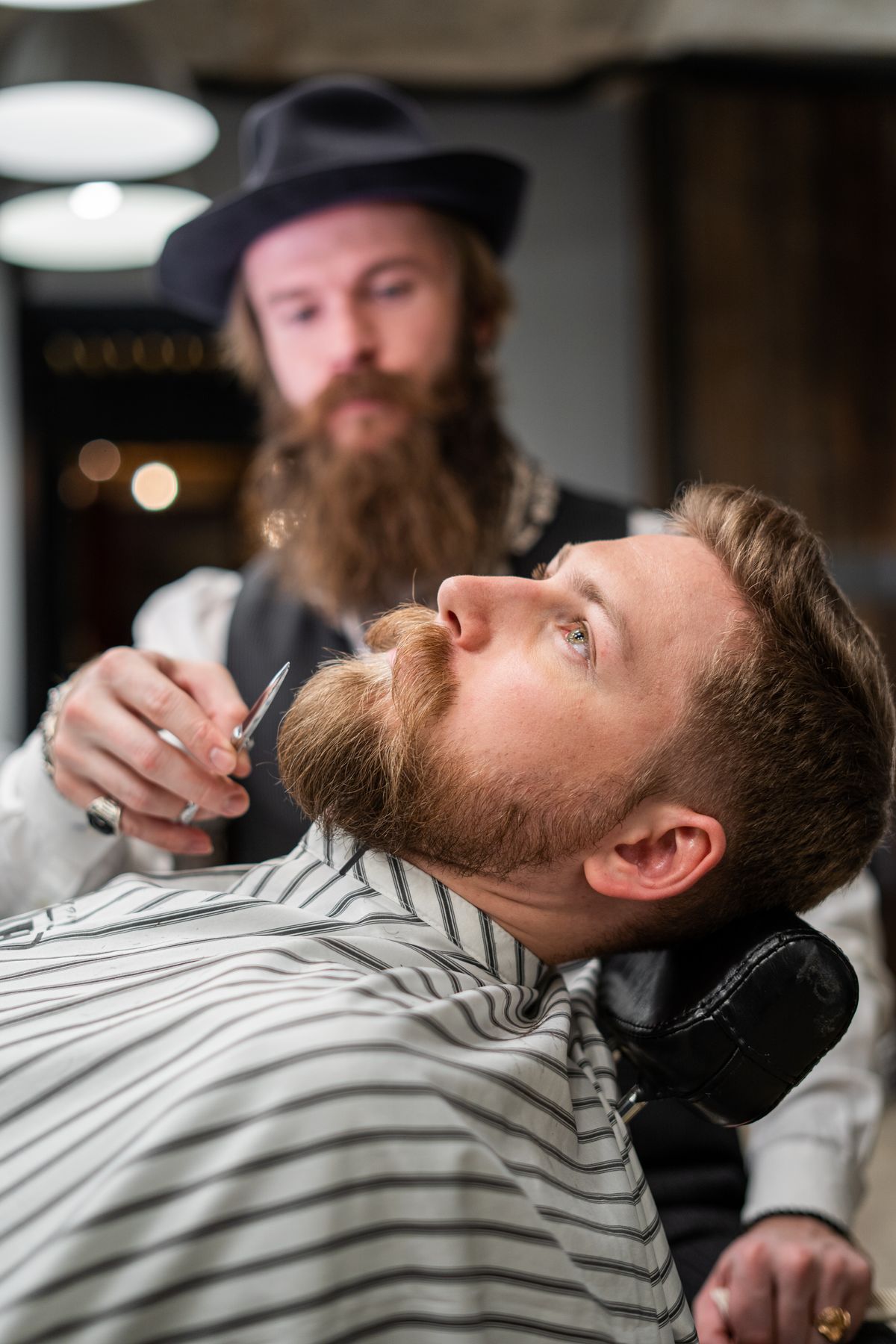
Beards grow at the same half inch a month, but shape goes before length does. A beard trim every two to four weeks keeps the cheek and neck lines where they were drawn and stops the gradual slide into shapelessness that men stop noticing in their own mirror. If your beard is part of your look, book it with the haircut or on the alternating visit, the same full cut, clean-up, full cut rhythm fade wearers use.
A simple way to lock it in
At your next cut, ask the barber two questions: what interval suits this style, and what will show first when it is overdue. Then book the next appointment before you leave, at that interval. If you consistently look overdue a few days before it, shorten by a week. If you arrive feeling like you barely need the cut, stretch by a week. Two cycles of that adjustment and you have your personal number, which matters more than any table, including this one.
Common questions
How often do most men actually need a haircut?
It depends on the style. Fades need two to three weeks, classic scissor cuts four to six, and longer styles six to eight. Your style sets the interval, not a universal rule.
My fade looks fine on top after three weeks. Why book sooner?
Because the skin zone and neckline grow out first and erase the blend, even while the top still looks good. The fade is judged at its shortest point.
Can I stretch my interval by choosing a different cut?
Yes. Moving from a skin fade to a taper or a longer fade is the most common way men trade a two-week schedule for a comfortable four-week one.
Photos in this guide are representative stock images.
← All guides from HairKutters← Back to HairKutters