Fade and taper get used as if they mean the same thing, and they do not. Men ask for one, picture the other, and leave with a cut that is technically what they said and not what they wanted. The difference takes a minute to learn and saves that conversation for the rest of your life.
At HairKutters in Rutherfordton, where fades and line-ups are everyday work, this is the explanation worth having once. It defines both cuts, covers who suits which, gives the exact words to use in the chair, and finishes with a year-round maintenance calendar, because the right choice also depends on the season you are heading into.
The definitions, plainly
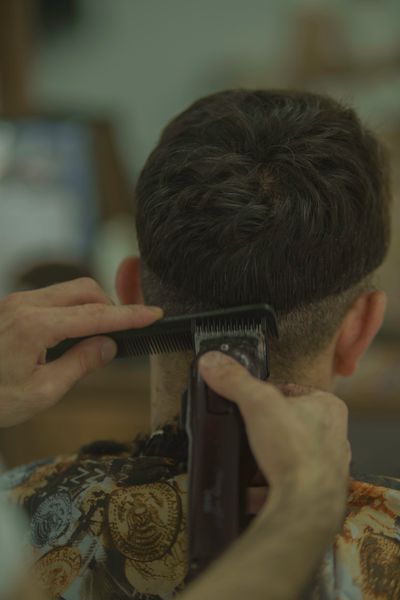
A fade blends the hair from longer on top down to very short, often to skin, across a large area of the sides and back. The transition happens high and gradually, so much of the side of the head is very short. A taper also shortens toward the bottom, but only at the very edges: around the ears, the sideburns, and the neckline. The bulk of the sides keeps real length, usually scissor-cut, and only the perimeter is faded in. In short, a fade is short everywhere on the sides; a taper is a longer cut with faded edges.
| Fade | Taper | |
|---|---|---|
| Where it gets short | Most of the sides and back, blending down to skin or near it | Only at the edges: ears, sideburns, and neckline |
| Overall look | Sharp, high-contrast, modern | Softer, classic, lower contrast |
| Grow-out | Shows in about 2 weeks; edges go first | Gradual over 4 to 6 weeks; stays tidy longer |
| Suits | Men who like a clean, defined finish and can keep a tight schedule | Men who want neatness with forgiveness, or thicker-looking sides |
| Words to use | Ask for low, mid, or high, and how short: skin, or a guard number | Ask for a taper on the sides and neckline, with scissor length kept on the sides |
Who suits which
Fades suit men who want a crisp finish and do not mind the upkeep, and they can add the look of density on top by reducing contrast at the sides. Tapers suit men whose hair is thinning at the sides less evenly, anyone whose workplace favors a conservative cut, and anyone who knows a two-week schedule will not survive their calendar. Neither is better. They are different tools, and a lot of men run a fade in summer and a taper in winter without ever naming the pattern.
The words to use in the chair
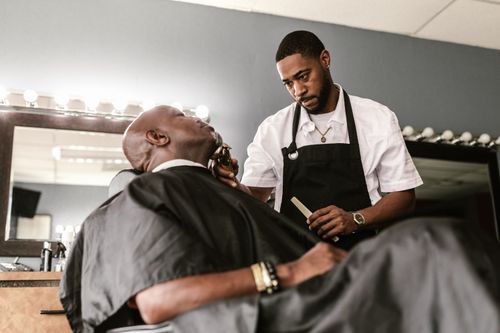
For a fade, three pieces of information cover it: where the fade starts (low, mid, or high), how short it goes at the bottom (skin or a guard number), and how much length stays on top. For a taper, say you want the sides scissor-cut with length kept, tapered clean at the ears and neckline. A photo still helps, but with these definitions you can check the photo together and agree on which of the two it actually shows, which is the step that prevents most mix-ups.
A year-round calendar for both
| Season | Fade wearers | Taper wearers |
|---|---|---|
| Spring | Return to a tighter schedule as photos and events pick up; clean the neckline every visit | Refresh the edges before Easter and graduation photos; check the shape after winter growth |
| Summer | Shortest and most frequent cuts of the year; heat makes the 2-week rhythm feel right | A taper is the cooler classic option; keep the neckline clean against summer sweat |
| Fall | Settle into an every 2 to 3 week rhythm; back-to-school and holiday photos reward consistency | Stretch to 5 or 6 weeks comfortably; book ahead of Thanksgiving |
| Winter | Watch dry scalp under very short sides; moisturize and avoid daily harsh shampoo | Longest intervals of the year work fine; a pre-holiday edge clean-up keeps it deliberate |
Whichever you choose, tell the barber which one you picked and why. That context helps them set the length, the blend, and the interval they suggest, and it turns your next visit into a continuation instead of a fresh translation problem.
Common questions
What is the difference between a fade and a taper?
A fade takes most of the sides down very short in a gradual blend. A taper keeps scissor length on the sides and only fades the edges at the ears, sideburns, and neckline.
Which lasts longer between cuts, a fade or a taper?
A taper, by a wide margin. Tapers grow out gradually over four to six weeks, while fades show regrowth in about two weeks.
Can I switch from a fade to a taper?
Yes, but it takes one grow-out cycle. The sides need a few weeks of length before a taper has something to work with, so plan the switch a month ahead.
Photos in this guide are representative stock images.
← All guides from HairKutters← Back to HairKutters